




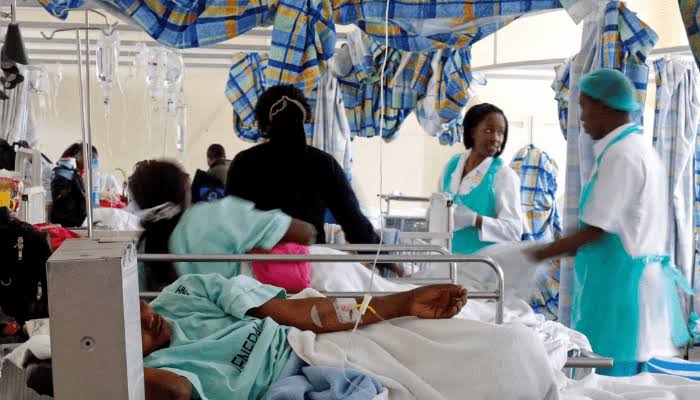
VOICE OF NAIJA – As Nigeria grapples with the latest cholera outbreak, questions arise about the government’s response to this public health crisis.
Cholera, a waterborne disease, was first reported in Nigeria in the 1970s, and since then Nigeria has experienced cholera outbreaks from time to time but the current outbreak has spread rapidly, claiming lives and leaving many infected.
The government has taken some measures, but the question remains: is it enough?
So far, the government has deployed healthcare workers to affected areas, established cholera treatment centers, and distributed water purification tablets.
While these efforts are commendable, they seem insufficient considering the scale of the outbreak. More needs to be done to contain the spread of cholera, particularly in rural areas where access to clean water and healthcare is limited.
READ ALSO: Timeline Of Cholera Outbreak In Nigeria
The government must intensify its efforts to provide clean water and sanitation facilities, especially in affected communities.
This includes constructing boreholes, repairing damaged water infrastructure, and promoting proper hygiene practices.
Moreover, healthcare workers should be equipped with adequate resources, including vaccines, to effectively manage the outbreak.
Given the severity of the situation, it is worth considering whether schools should go on break to prevent further spread.
While this decision should not be taken lightly, the safety of students must be prioritized.
Temporary closures could allow for thorough disinfection and sanitation of school premises, reducing the risk of transmission.
Health institutions must also play a critical role in containing the outbreak.
They should establish dedicated cholera treatment units, provide accurate diagnosis and treatment, and conduct thorough contact tracing.
Furthermore, they must collaborate with community leaders to raise awareness about cholera prevention and management.
READ ALSO: WHO Declares Resurgence Of Cholera A Global Horror
The global angle cannot be ignored. Cholera outbreaks in neighboring countries, such as Cameroon and Niger, highlight the need for regional cooperation to combat this disease.
Nigeria should engage with international organizations, like the World Health Organization (WHO), to access resources, expertise, and support.
Some have called for a declaration of a state of emergency which could facilitate access to global aid and expertise, but this decision should be made after careful consideration of its implications.
While the government has taken some steps to contain the cholera outbreak, more needs to be done to address this public health crisis.
Intensified efforts in water and sanitation, healthcare, and education are crucial.
Nigeria must also explore global partnerships to combat cholera regionally. Only then can we hope to contain this outbreak and prevent future ones.
The lives of Nigerians depend on it.